The world today is under the influence of rapid technological developments and complex global challenges. In this dynamic environment, it is vital for individuals not only to be knowledgeable but also to be able to use that knowledge to produce creative solutions and think critically. This is precisely where STEM Education (Science, Technology, Engineering, Mathematics) comes into play, undertaking the mission of raising competent, productive, and innovative individuals for the future.
What is STEM and Why is it Important?
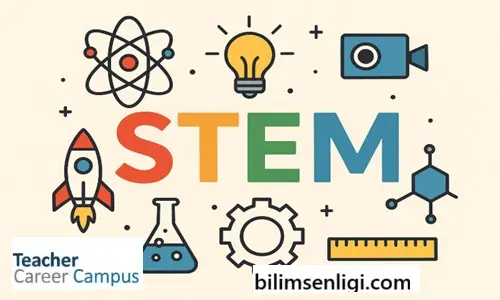
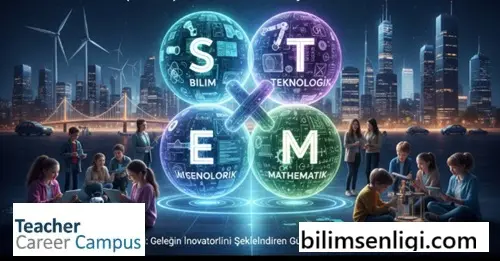
The acronym STEM refers to an interdisciplinary educational approach. Unlike traditional education systems, STEM education treats the fields of Science, Technology, Engineering, and Mathematics not as separate subjects, but as an integrated whole, interwoven with daily life. This holistic approach offers students the opportunity to learn by applying theoretical knowledge to real-world problems.
The importance of STEM education is not limited to academic success; it also equips students with critical competencies known as 21st Century Skills. These skills include analytical thinking, critical thinking, problem-solving, creativity, collaboration, and communication. International organizations such as the Organisation for Economic Co-operation and Development (OECD) predict that a large majority of the most in-demand jobs in the future labor market will be related to STEM fields. Therefore, it is essential for a country to have a qualified, STEM-educated workforce to increase its global competitiveness and sustain its economic development.
The Depth of STEM Fields
Each STEM field contributes to the development of different skills and knowledge sets in students:
- Science: Equips students with the ability to observe, research, inquire, and understand the world using scientific methods.
- Technology: Aims for students to understand, use advanced technologies, and develop new tools with a sense of ethical responsibility. Robotics, coding, and digital literacy form the basis of this area.
- Engineering: Directs students to design and implement creative solutions within defined constraints. The processes of problem definition, prototype development, and testing are central to engineering thinking.
- Mathematics: Develops logical thinking, abstraction, and problem-solving skills, providing the numerical competence that is the foundation for other STEM fields.
The integration of these disciplines ensures that students understand not only “what” but also “why” and “how.” For instance, a student designing a simple bridge model (Engineering) must use mathematical formulas to calculate the bridge’s load capacity (Mathematics) and apply physics principles to understand the durability of the materials used (Science). Throughout this entire process, digital design tools (Technology) can be utilized.
Core Principles and Implementation of STEM Education
STEM education is based on a student-centered approach and is shaped around the following core principles:
- Project-Based Learning (PBL): Students learn by working on projects inspired by real-world problems. These projects ensure that knowledge becomes permanent through practical application rather than mere memorization.
- Collaboration and Teamwork: Complex problems are often not solvable by a single individual. STEM projects bring students together, fostering skills in exchanging ideas, evaluating different perspectives, and working toward common goals.
- Research and Inquiry: Moving away from rote learning, it encourages students’ natural curiosity. Students ask questions, develop hypotheses, conduct experiments, and analyze results. This process helps them become producers of knowledge, not just consumers.
- Practical Experiences: Applied learning environments, such as STEM labs, workshops, robotics, and coding activities, ensure that theoretical knowledge is transformed into a tangible output.
STEM education is applicable at every stage of education, from pre-school to higher education. This process, which begins with simple construction games and observations in pre-school, evolves into complex scientific research and engineering projects at the high school and university levels. It is also a critical factor for the success of education that teachers adopt this approach and develop their competence in this area.
STEM and the Future Perspective
STEM education not only develops students academically and personally but also prepares them for the future world of work. According to World Economic Forum reports, with the rise of technologies like automation and artificial intelligence, human-centric skills such as critical thinking and problem-solving will become even more valuable. STEM education forms the foundation of these skills.
STEM careers are not limited to traditional areas like software engineering or biotechnology. Many sectors, including healthcare, finance, arts (as in the STEAM approach), agriculture, and energy, require STEM-educated individuals. For example, the greatest challenges, such as climate change, sustainable energy sources, or global pandemics, can only be overcome through innovation and scientific solutions in STEM fields.
In conclusion, STEM education is one of the most powerful educational approaches of our time, aiming to raise children not just as knowledge consumers, but as knowledge producers and practitioners. By nurturing students’ curiosity, equipping them with analytical thinking and teamwork competencies, this approach shapes the leaders and innovators of the future and is a vital key to individual and societal development. Investing in the future is possible through quality STEM education.